
HomeBlogsExample ItinerariesUSA: roundtrip Minneapolis
USA: roundtrip Minneapolis
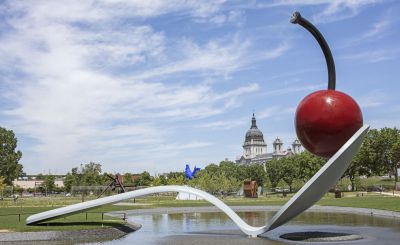
Minnesota, North Dakota, and South Dakota show you a very different side of the United States from the well-known routes through the Southwest. On this RV road trip from Minneapolis, the forests and lakes of Minnesota give way to the open prairies of North Dakota and the Missouri River in South Dakota. Along the way, you’ll visit smaller American cities, see the headwaters of the Mississippi River, and stop at several places that tell the story of the region’s history and culture.
.jpg "Example itinerary Minneapolis")
Days 1 and 2: Minneapolis
Use your first couple of days to recover from your flight and explore Minneapolis and neighboring St. Paul. Together they form the Twin Cities, with the Mississippi River running through the metropolitan area. You can walk along the river, see the Stone Arch Bridge, or visit St. Paul, the capital of Minnesota. If you want to do some shopping, head to the Mall of America in Bloomington, close to Minneapolis–Saint Paul International Airport. Minneapolis also has an interesting music history: Prince grew up here, and several locations in and around the city are connected to his career.
Two nights in Minneapolis also give you enough time to stock up on groceries and prepare for the RV portion of your trip.
Day 3: Minneapolis – Duluth, approx. 152 mi (245 km) – 2.5 hours
Today you pick up your RV and begin your road trip. From Minneapolis, drive north toward Duluth. As you travel farther into Minnesota, the urban landscape gradually gives way to forests, lakes, and smaller communities.
Duluth sits on Lake Superior, the largest of the Great Lakes by surface area. Canal Park and the waterfront are good places to get your first impression of the city. You can also see the shipping traffic that has played an important role in Duluth’s history and economy. Afterward, head to a campground in or around the city and settle in for your first night on the road.
Day 4: Duluth – Bemidji, approx. 152 mi (245 km) – 3 hours
Drive west through northern Minnesota on a relaxed stretch through forests, lakes, and small communities. Bemidji sits on the shore of Lake Bemidji and is closely associated with the folklore of lumberjack Paul Bunyan and his blue ox, Babe. The statues of the pair along the waterfront are among the city’s recognizable landmarks. If you have extra time, walk or bike around Lake Bemidji or explore part of the Paul Bunyan State Trail.
Day 5: Bemidji – Itasca State Park, approx. 47 mi (75 km) – 1 hour
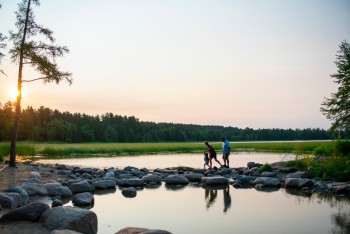
Today’s drive is short, leaving plenty of time to explore Itasca State Park. This is where the Mississippi River begins its long journey to the Gulf of Mexico. At the Mississippi Headwaters, the river is still so narrow and shallow that, when conditions allow, you can cross from one side to the other on stepping stones.
Itasca is also Minnesota’s oldest state park. In addition to the Headwaters, you’ll find lakes, forests, and hiking trails. Spending the night in or near the park works well with this itinerary, but check campground availability in advance and make reservations early during busy travel periods.
Day 6: Itasca State Park – Fargo, approx. 103 mi (165 km) – 2.5 hours
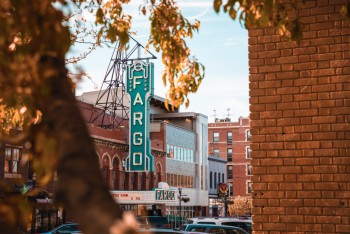
Leave the forests around Itasca behind and drive toward the Minnesota–North Dakota border. Along the way, the landscape gradually becomes more open. Fargo sits on the Red River, directly across from Moorhead, Minnesota.
Downtown Fargo has restaurants, cafés, shops, and historic buildings. Movie fans may want to stop at the Fargo-Moorhead Visitors Center, where a woodchipper is displayed as a prop from the movie Fargo. The day combines the transition into the Great Plains with a relaxed afternoon or evening in the city.
Day 7: Fargo – Jamestown, approx. 96 mi (155 km) – 1.5 hours
Continue west on Interstate 94 across the North Dakota prairie. Long, straight roads and distant horizons give you a sense of just how sparsely populated this part of the United States is. Jamestown is known as the Buffalo City. Here you’ll find Dakota Thunder, the large bison statue near Frontier Village. The National Buffalo Museum is located at the same site. It’s a fitting stop on this itinerary because the American bison is closely connected to the history and ecology of the Great Plains.
Day 8: Jamestown – Bismarck, approx. 103 mi (165 km) – 1.5 hours
The next stretch across the prairie takes you to Bismarck, the capital of North Dakota. An interesting stop is the North Dakota Heritage Center & State Museum on the State Capitol grounds. Its exhibits cover topics including North Dakota’s geological history, Indigenous peoples, and the development of the state.
Afterward, take some time to explore the area around the Missouri River. From this point on, the river becomes an important part of the route and remains so as you travel south the following day.

Day 9: Bismarck – Mobridge, approx. 112 mi (180 km) – 2 hours
From Bismarck, travel through the Missouri River region toward South Dakota. Once you leave the urban area around Bismarck, the scenery returns to sparsely populated farmland, prairie, and large expanses of water. Mobridge sits on Lake Oahe, the enormous reservoir on the Missouri River. The surrounding area offers opportunities for hiking, fishing, and other activities on and around the water. This overnight stop mainly provides a quiet break between Bismarck and the longer drive the following day.
Day 10: Mobridge – Mitchell via Chamberlain, approx. 242 mi (390 km) – 4 hours
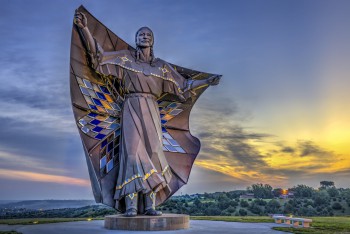
This is one of the longer driving days of the road trip, but there are several worthwhile stops along the way. Near Chamberlain, the 50-foot-tall Dignity of Earth & Sky statue overlooks the Missouri River. Created by artist Dale Lamphere, the sculpture depicts an Indigenous woman wearing a star quilt and honors the cultures of the Lakota and Dakota peoples.
In Chamberlain, you can also visit the Aktá Lakota Museum & Cultural Center. The museum focuses on the history, art, and culture of the Lakota and other peoples of the Northern Plains.
Continue to Mitchell, home to the Corn Palace, a distinctive building whose exterior is decorated with large murals made from corn, grains, and grasses. The designs change regularly, so the building’s appearance evolves over the years.
Day 11: Mitchell – Sioux Falls, approx. 75 mi (120 km) – 1 hr 15 min
After yesterday’s longer drive, today’s route is short. Sioux Falls is the largest city in South Dakota and takes its name from the waterfalls of the Big Sioux River.
Start at Falls Park, just north of downtown. Walking paths and overlooks provide different views of the river and the rock formations surrounding the falls. From there, continue into downtown Sioux Falls. Along its streets, you’ll find a variety of artworks that are part of SculptureWalk. Restaurants and shops make downtown a convenient place for a relaxed final evening before returning to Minnesota.
Day 12: Sioux Falls – Minneapolis, approx. 233 mi (375 km) – 4 hours
Today you drive back to Minneapolis. Most of the route follows Interstate 90 before turning north toward the Twin Cities. When planning this final day, allow enough time for your scheduled RV return and possible traffic as you approach Minneapolis.
If your RV needs to be returned early in the day, consider spending your final night closer to Minneapolis or adding an extra travel day. This helps prevent the last leg of your road trip from feeling unnecessarily rushed.
Practical information for this route
-
Route distance: Plan on approximately 1,305 mi (2,100 km) for the road trip described above. Additional mileage to and from campgrounds, grocery stores, and attractions will add to the total.
-
Trip duration: 12 days is possible, but it makes for a fairly active itinerary. With 14 days, you’ll have more flexibility for additional overnight stays and shorter driving days.
-
Best time to travel: Summer through early fall is generally the most practical period for an RV road trip through Minnesota, North Dakota, and South Dakota. Weather in these northern states can change quickly, so check current conditions shortly before and during your trip.
-
RV pickup: After arriving on an international flight, you must spend at least one night in the United States before picking up your rental RV. You can find current options for RV rental in Minneapolis.
-
Campgrounds: You’ll find both commercial campgrounds and state park campgrounds along this route. Popular locations, including campgrounds in and around Itasca State Park, can fill up quickly during summer, so advance reservations are recommended when you want to stay at a specific location.
-
Driving: Most of this route follows highways and Interstate roads that are suitable for RV travel. Keep in mind that traveling by RV generally takes more time than driving the same route by car, especially when you factor in stops, refueling, and urban traffic.
-
Fuel: Distances between services become greater outside the larger towns and cities. Refuel in good time, particularly on stretches through North Dakota and South Dakota.
-
Weather: Summer weather on the Great Plains can change quickly, and strong thunderstorms are possible. Check the weather forecast and local road conditions each day.
-
Reservations: Check current opening hours for museums and visitor centers shortly before your visit. Reserve campgrounds in advance if you’re traveling during peak season or want to stay at a particular campground.